
EMDR
Eye Movement Desensitisation and Reprocessing (EMDR) is an evidence-based psychological therapy used to treat difficulties rooted in distressing or overwhelming life experiences. EMDR works by helping the brain process memories that have been stored in a “stuck” or unintegrated way, often leading to ongoing emotional, behavioural, or physiological symptoms. Through a structured protocol and the use of bilateral stimulation (such as eye movements, alternating tones, or tactile pulses), EMDR supports the brain’s natural information-processing system so that traumatic or disturbing memories can be reprocessed and stored more adaptively. EMDR helps your brain reprocess these memories so the distress softens, and the memory becomes part of your past rather than something that keeps reactivating.
EMDR is not only for severe trauma. It has been shown to help with a wide array of emotional, psychological, and somatic challenges, including:
Past trauma, single-event or complex
Anxiety, panic attacks or phobias
Depression or low mood rooted in difficult memories
Chronic distress, unresolved grief or loss
Overwhelm, stuckness, low self-esteem or persistent negative beliefs
Recurring stress symptoms (even when the “danger” is long gone)
Situations where talk therapy alone has not led to relief
If memories, body sensations, or emotions keep getting reactivated and interfere with your life, EMDR may help you process them differently, so they no longer hold you back.
Who can benefit from EMDR?
What to Expect: The Process in EMDR
We will follow a carefully structured, eight-phase process, designed to meet you where you are and move at your pace.
History & Assessment: We begin by exploring your life history, current difficulties, and what you hope to get from therapy. This gives us a map of potential “targets” - memories, beliefs, or events that may benefit from processing.
Preparation & Stabilisation: Before diving into processing, we ensure you feel safe and resourced. You’ll learn grounding, self-calming and stabilization techniques (especially important when processing trauma or intense memories).
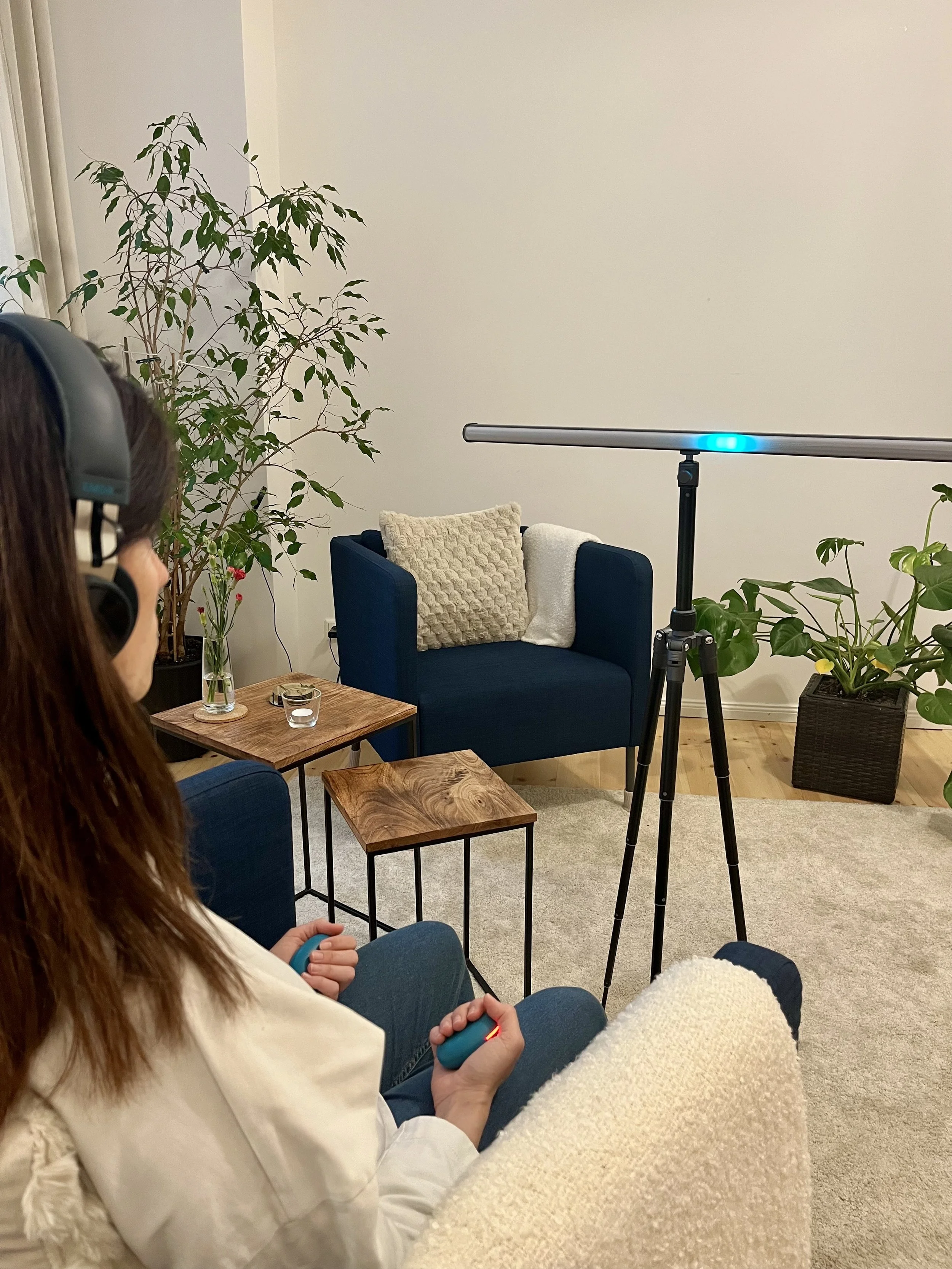
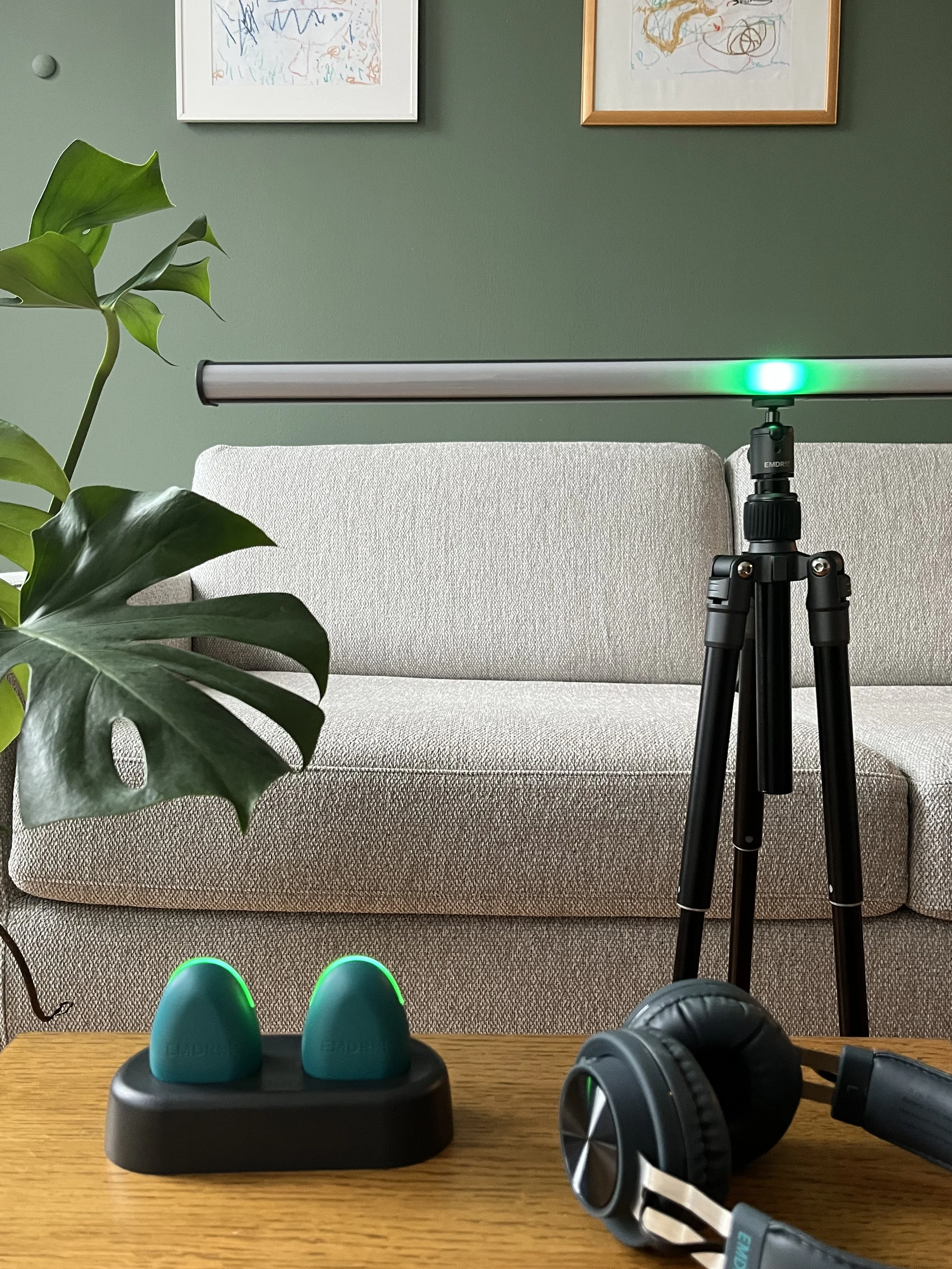
Target Identification & Processing: We select a memory or life event, and you bring to mind its associated image, emotions, body sensations, and negative beliefs about self. Simultaneously, we apply bilateral stimulation (BLS). BLS is traditionally eye movement, but it is important to note that this is not the only option and we will work together to ascertain which type of BLS is the most effective for you, whether that be
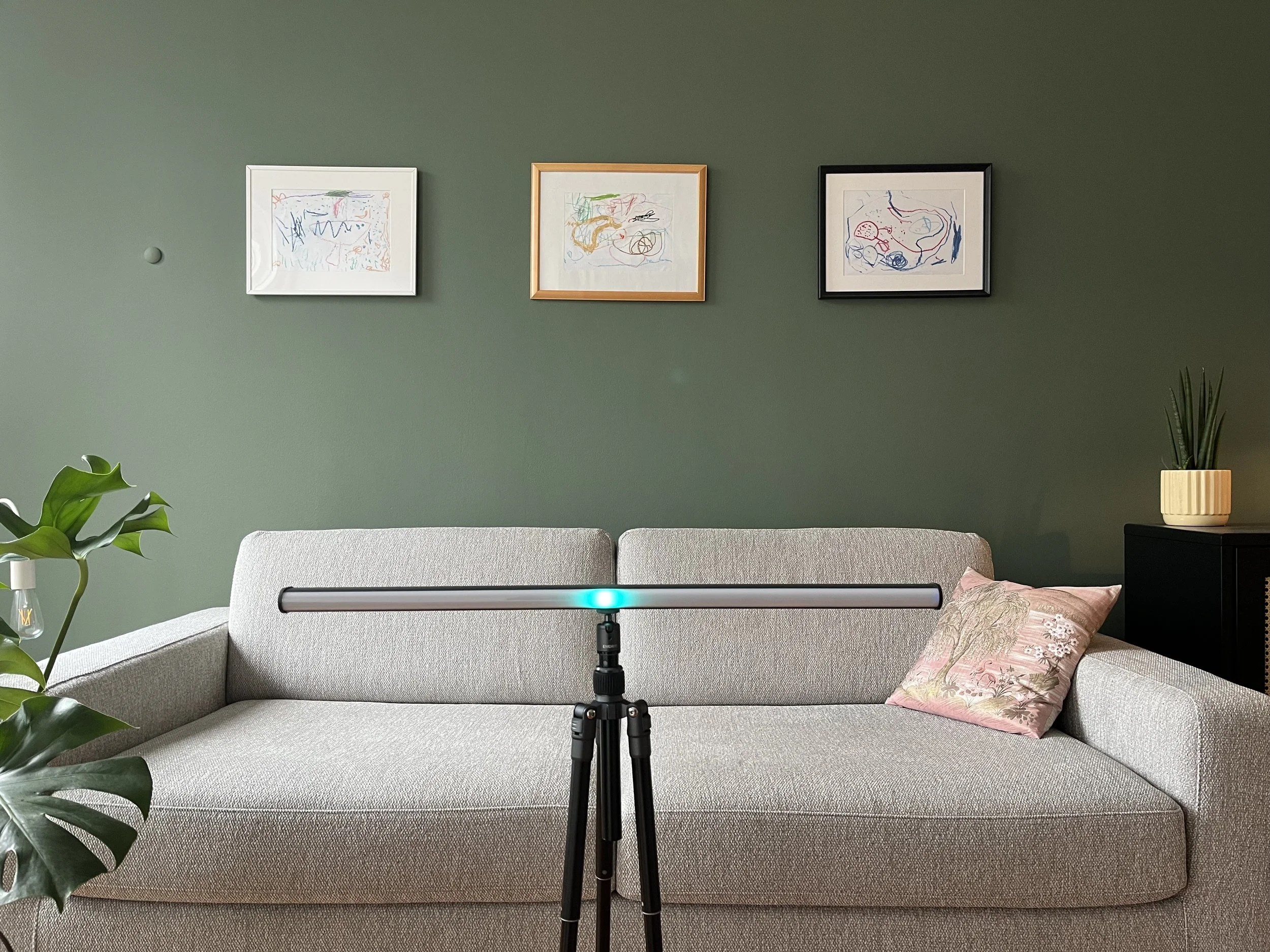
eye-movements (following the light or my hand)
audio tones via headphones
haptic touch (buzzers / tapping)
or a combination. As you follow the stimulus and hold the memory in awareness, your brain is invited to reprocess it. Over time you will notice a reduction in distress, alongside the emerging of more realistic or positive perspectives and beliefs.
Integration & Healing: Once the memory no longer triggers distress, we will move on to anchoring a more supportive belief. As our work together progresses, we can also we can also process present-day triggers and anticipated future challenges, supporting a comprehensive and integrated therapeutic outcome.
Client Testimonials
“I still can’t believe the impact EMDR has had on my life - already within a few sessions things started shifting - I started feeling a lightness and a sense of hope I hadn’t had for years. I realised for the first time why an earlier experience had affected me as strongly as it had and I was able to let go of the negative beliefs I had about myself which I hadn’t even realised had been holding me back.”
— KT
“I’ve noticed I’m not reacting to things as strongly that used to trigger me. I’m less angry too. I was skeptical at first, but after years of talking therapy I was also desperate for change. I am so glad I gave EMDR a go - it’s been life changing.”
— HH
“What changed for me is that I can think about the past without my whole body tightening up. The memories didn’t disappear, but they don’t overwhelm me anymore - it’s as if I’m looking at them through a pane of glass, or reading about them in a book. I finally feel like I can put some things behind me now.. which a few months ago I didn’t think was ever going to be possible!”
— CS